
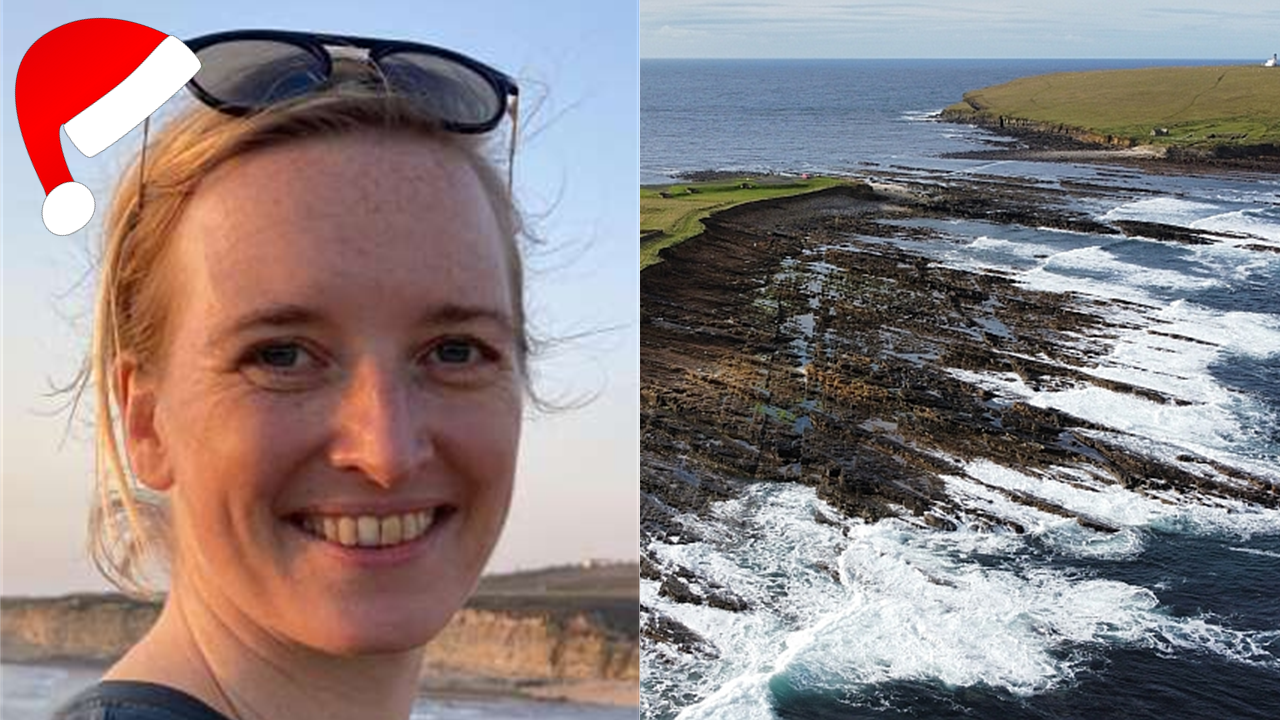
Velkommen til foredrag og julesamling med lokalavdelingen i Oslo!
Welcome to this year’s Christmas talk and gathering with the local branch in Oslo!
Vi har booket Auditorium I på Geologibygningen på Blindern 11. desember kl 16.00 – 20.00, og vil gjerne samles til en hyggelig juleavslutning med akkurat deg! Vi begynner med foredrag fra Annique van der Boon (UiO), og deretter blir det mingling med pizza og drikke.
For at vi vet omtrent hvor mye pizza vi skal bestille, ønsker vi oss at du melder deg på ved å sende oss en epost til post.oslo@geofysikk.org innen 10. desember. Men skulle du spontant få tid i løpet av 11. desember, er du fortsatt hjertelig velkommen også.
English version
We have booked Auditorium I in the Geology building at UiO, campus Blindern, on 11 December from 16:00 and 20:00, and would like to welcome you and your colleagues to a social gathering towards Christmas and the end of the year. We will first listen to this year’s Christmas lecture by Annique van der Boon (UiO) and afterwards mingle with pizza and something to drink.
In order to know roughly how much pizza we should order, we kindly ask you to sign up by sending an email to post.oslo@geofysikk.org latest 10 December. If you however, should spontaneously be able to join on 11 December, you’re still very welcome.
Årets juleforedrag holdes av Annique van der Boon (Annique van der Boon – Department of Geosciences):
A promising novel recorder of Earth’s ancient magnetic field: fossil micrometeorites as paleomagnetic archives
The paleomagnetic record from sedimentary rocks is often ambiguous, limiting the recovery of reliable paleomagnetic data, particularly when compared to paleomagnetic data obtained from igneous rocks. I will introduce a novel, unexplored recorder of Earth’s magnetic field: fossil micrometeorites. Micrometeorites (MM) are small cosmic particles (50 μm-2mm) that make up a substantial part of the ~40,000 tons of extraterrestrial material delivered to Earth each year. Many MMs melt during atmospheric entry at altitudes of 80-90 km, transforming into cosmic spherules (CS). During this process, particles oxidise and form new minerals, particularly wüstite and magnetite, which record thermoremanent magnetisations upon subsequent cooling.
CS are strongly magnetic and can be extracted from sedimentary rocks. Diagnostic features such as metal beads and vesicles inside some CS allow the reconstruction of their flight trajectory, which can be combined with their magnetisations to reconstruct the polarity of Earth’s magnetic field. While modern CS from Antarctica are already known to be robust recorders of the geomagnetic field, their deep-time counterparts remain almost entirely unexplored. I will present the first results of a paleomagnetic study of anthropogenic magnetite spherules that resemble iron-type (I-type) CS, as well as several Paleozoic I-type CS. These 50-300 μm spherules are measurable with standard paleomagnetic tools and, together with flight trajectories obtained using NanoCT scanning, are capable of opening a new window on the ancient geomagnetic field.
Bilder/photos: Simon Lloyd, UiO